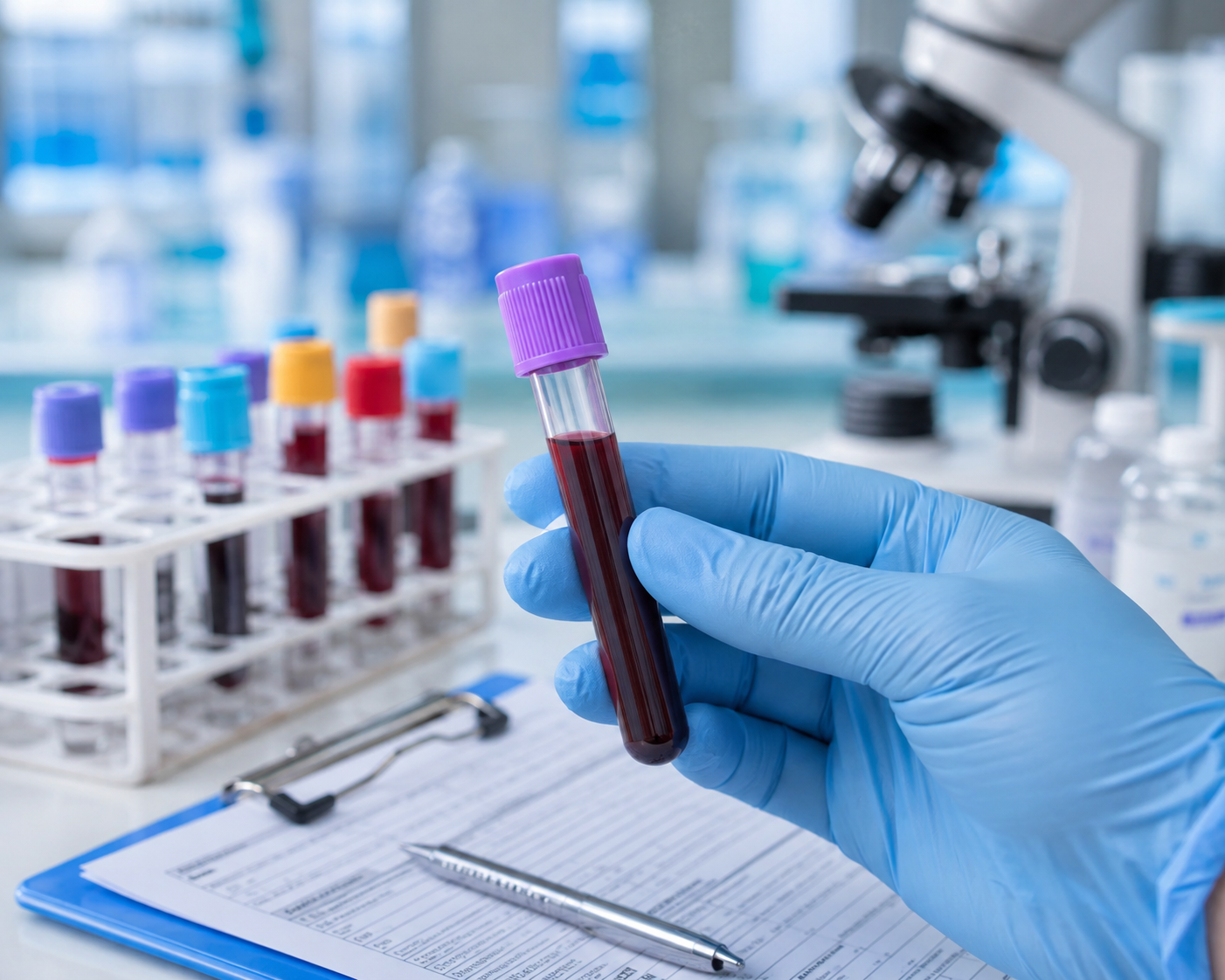
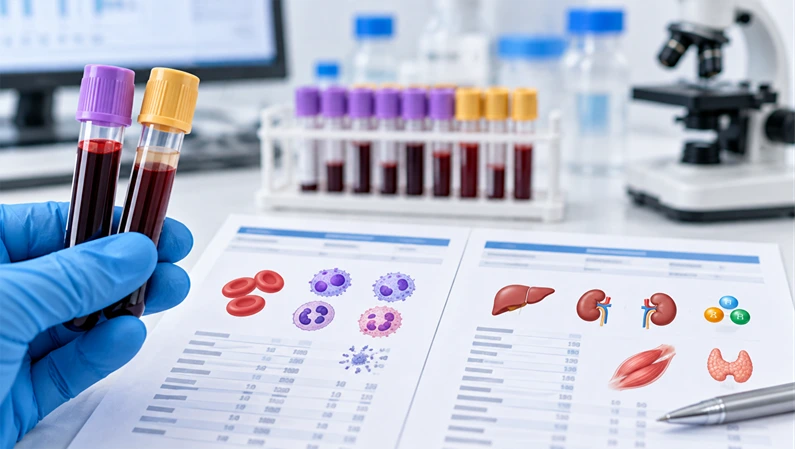
A complete blood count (CBC) measures the cells in your blood: red cells, white cells, and platelets. A comprehensive metabolic panel (CMP) measures your blood chemistry, including glucose, electrolytes, and markers of kidney and liver function. Both are among the most frequently ordered lab tests, and they often appear in the same lab order. That’s usually where the confusion starts, because the names sound alike even though each panel looks at a different part of your health. Understanding CBC vs CMP testing helps you see why your doctor ordered one, the other, or both.
Below, we break down what each panel measures, how the two compare, and what to expect when you come in for your blood draw.
What a Complete Blood Count (CBC) Measures
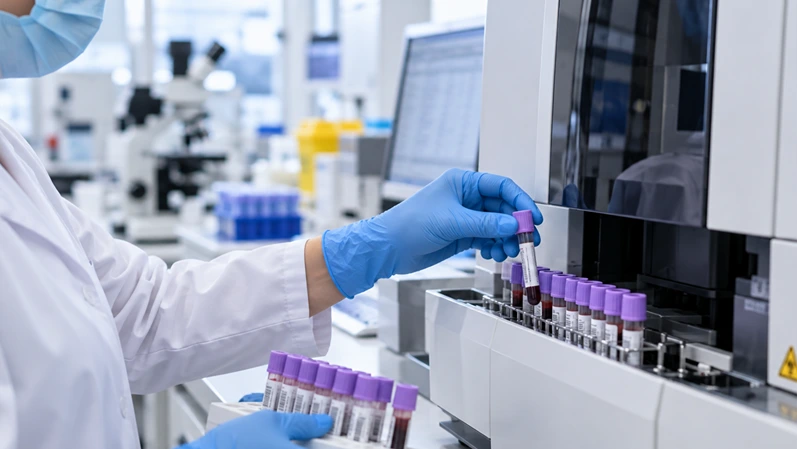
So, what is a CBC blood test? It’s a count and assessment of the three main types of cells circulating in your bloodstream. Your sample runs through an automated hematology analyzer that counts cells and measures their size and other characteristics. According to MedlinePlus, a CBC is commonly ordered as part of a routine checkup or to help look into symptoms such as fatigue, weakness, bruising, or signs of infection.
Providers use the CBC as a broad screening tool. It doesn’t diagnose a specific condition on its own, but it can point toward areas that deserve a closer look.
Red Blood Cells
Red blood cells carry oxygen from your lungs to the rest of your body. The red cell portion of a CBC usually includes:
- Red blood cell count (RBC): the number of red cells in your sample
- Hemoglobin: the oxygen-carrying protein inside red cells
- Hematocrit: the percentage of your blood volume made up of red cells
- Red cell indices (MCV, MCH, MCHC, RDW): measurements of red cell size, hemoglobin content, and how much cell size varies
Providers typically review these values together when looking into low energy, possible anemia, or blood loss.
White Blood Cells
White blood cells are part of your immune system. The CBC reports a total white blood cell count (WBC), and many orders add a differential, which breaks that total into five types: neutrophils, lymphocytes, monocytes, eosinophils, and basophils. The differential gives your provider more detail, which can help when infection, inflammation, or a medication effect is being considered.
Platelets
Platelets are small cell fragments that help your blood clot. The CBC reports a platelet count, and many labs also report mean platelet volume (MPV), the average size of your platelets. Platelet results are especially relevant for patients with unusual bruising or bleeding, those taking certain medications, and anyone preparing for a procedure.
What a Comprehensive Metabolic Panel (CMP) Measures
If you’re asking what a CMP blood test is, think of it as a group of 14 chemistry tests run on the liquid portion of your blood (serum or plasma) rather than on the cells. MedlinePlus describes the CMP as a way to check your body’s chemical balance and metabolism, including how well your kidneys and liver are working. It’s a regular part of many annual physicals and is often used to monitor patients on medications that can affect organ function.
If you’ve had a basic metabolic panel (BMP) before, the CMP includes all eight BMP tests plus six more focused on liver function and proteins.
Glucose and Electrolytes
- Glucose: your blood sugar, the body’s main energy source
- Calcium: a mineral involved in nerve, muscle, and heart function
- Sodium, potassium, and chloride: electrolytes that help regulate fluid balance, nerve signals, and muscle contractions
- Carbon dioxide (bicarbonate): a marker of your body’s acid-base balance
Because glucose is part of the panel, providers frequently ask patients to fast before a CMP.
Kidney Markers
- Blood urea nitrogen (BUN): a waste product that healthy kidneys filter out of the blood
- Creatinine: a waste product of normal muscle activity, also cleared by the kidneys
Many lab reports also include an estimated glomerular filtration rate (eGFR), calculated from your creatinine result and factors such as age, to estimate how efficiently the kidneys are filtering.
Liver Markers
- Albumin and total protein: proteins made largely by the liver
- Alkaline phosphatase (ALP): an enzyme found mainly in the liver and bones
- ALT and AST: enzymes that can rise when liver cells are irritated or damaged
- Bilirubin: a substance produced when red blood cells break down, which the liver processes and clears
Bilirubin is a good example of how the two panels connect. It’s measured on the CMP, but it comes from the same red blood cells counted on the CBC.
CBC vs CMP: The Key Differences
The difference between a CBC and CMP comes down to this: the CBC looks at what’s floating in your blood, and the CMP looks at what’s dissolved in it. Here’s how the two panels compare side by side.
| Feature | Complete Blood Count (CBC) | Comprehensive Metabolic Panel (CMP) |
| What it measures | Red blood cells, white blood cells, and platelets | Glucose, electrolytes, calcium, proteins, kidney markers, and liver markers |
| Number of markers | Around 10 core values, with 5 more when a differential is added (varies by lab) | 14 standard tests |
| Fasting required | Usually not required | Often requested; follow your provider’s instructions |
| Common reasons ordered | Routine checkups, fatigue, signs of infection, bruising or bleeding, pre-procedure screening, medication monitoring | Routine checkups, blood sugar and electrolyte checks, kidney and liver function, medication monitoring |
| Sample type | Whole blood, collected in a lavender-top (EDTA) tube | Serum or plasma, commonly collected in a gold-top or green-top tube |
One panel isn’t a substitute for the other. A CBC tells you nothing about kidney function, and a CMP tells you nothing about your platelet count. That’s why the two are so often ordered as a pair.
For ordering providers, both panels can be requested individually or together. Test codes, specimen requirements, and tube types are available in our lab test finder.
Why Your Doctor May Order Both
Getting a CBC and CMP together is one of the most common combinations in routine and diagnostic lab work. Because each panel covers a different system, the pair gives your provider a broader baseline from a single visit. If you’re wondering which blood test you need, your provider makes that call based on your history, symptoms, and the questions they’re trying to answer. Common reasons for ordering both include:
Annual physicals and wellness visits. The pair offers a general snapshot of blood cell health, blood sugar, electrolytes, and organ function, which gives your provider a baseline to compare against in future years.
Looking into symptoms. Symptoms like ongoing fatigue, dizziness, or unexplained weight changes can have many possible causes. Checking both blood cells and blood chemistry helps your provider narrow the possibilities.
Before surgery or a procedure. Pre-procedure screening often includes platelet levels and blood counts along with kidney function and electrolytes.
Medication monitoring. Some medications can affect blood cell counts, liver enzymes, or kidney function, so providers may repeat one or both panels over time.
Tracking an ongoing condition. For patients managing a chronic health condition, repeat testing helps providers see how values change over months or years.
For patients, getting both done is simple: one needle stick, a few tubes, and you’re on your way. Your provider may also add related tests, such as a lipid panel or hemoglobin A1c, and you can browse those in our full lab test menu.

Why Choose Pacific Medical Laboratory
Pacific Medical Laboratory has served patients and providers from Irvine, CA for more than 17 years, processing over 2 million tests every year. Whether you’re a patient with a lab order in hand or a practice looking for a reliable lab partner, here’s what you can expect:
- CLIA certification and testing overseen by board-certified pathologists and scientists
- Fast results, with 95% of results delivered within 24 hours
- 15+ patient draw stations across Southern California
- Real people on the phone, not call centers, when you have a question
- Mobile phlebotomy for homebound and elderly patients
- 24/7 online results through our patient and clinician portals
- Provider support including EMR integration and temperature-controlled courier service with after-hours lock box pickup
Understanding Your CBC vs CMP Results
The CBC gives your provider a picture of your blood cells, and the CMP gives a picture of your blood chemistry and organ function. Neither panel diagnoses a condition on its own. Your results are interpreted alongside your medical history, symptoms, medications, and other test results.
Keep in mind that reference ranges vary by lab, and they can also depend on factors like age and sex. A value flagged outside a lab’s range isn’t automatically a cause for concern, so review your report with your provider rather than drawing conclusions from a single number. Once your results are ready, you can view them anytime in the Pacific Medical Laboratory patient portal.
Have a lab order for a CBC, a CMP, or both? Find a draw station near you on our locations page, or call our team at (714) 972-2222.
Frequently Asked Questions About CBC vs CMP
Do I need to fast before a CBC or CMP?
A CBC usually doesn’t require fasting, but a CMP often does because it includes a glucose measurement. MedlinePlus notes that fasting for 8 to 12 hours may be needed before a CMP, and water is typically allowed. Always follow the instructions from your provider, since prep requirements can vary. If both panels are on the same order, plan to fast.
Can a CBC and CMP be done from the same blood draw?
Yes. Both panels are usually collected during a single needle stick, using separate tubes. The CBC tube contains an anticoagulant that keeps the cells intact, while the CMP tube is designed to separate serum or plasma. The draw itself typically takes just a few minutes.
Which is more important, a CBC or a CMP?
Neither is more important, because they answer different questions. The CBC evaluates blood cells, while the CMP evaluates blood chemistry and organ function. Your provider chooses based on what they need to check, and ordering both is common when a broader picture is useful.
How long do CBC and CMP results take?
At Pacific Medical Laboratory, 95% of test results are delivered within 24 hours. Timing for an individual order can depend on when your sample is collected and whether additional tests are included. When your results are ready, you can view them in the patient portal, and your provider receives them directly.
Where can I get a CBC and CMP done in Southern California?
Pacific Medical Laboratory offers CBC and CMP testing at more than 15 patient draw stations across Southern California. Bring your lab order and a photo ID, and follow any fasting instructions your provider gave you. You can find the closest draw station on the Locations page at pacificmedlab.com, and mobile phlebotomy is available for homebound and elderly patients.